What is darkroom development and why does it matter?
Frustrations and joy

Analog photography is having a moment. I’ve noticed a real uptick in interest over the past year, and I think it makes sense. As AI becomes more dominant in our lives and work, people are reaching for something physical — something they can hold and make with their hands.
Many people who shoot film send it to a lab for development and scanning. The physical part of the process ends at loading the film and the click of the shutter. Last year I learned to develop and print black-and-white film myself. This post is about the development process and why I think it’s worth learning.
Film is organic
Unlike digital, film is a physical medium. Shooting on film is literally burning light onto a chemical surface. Like other organic things, film can expire, warp, and surprise you. Development is the part where you take what you’ve captured and bring it into the world yourself.
The steps of development
The first step happens in complete darkness. The film is unloaded from its canister and wound carefully onto a film spool — this part requires patience. For my first several rolls, and still occasionally, one of my film teachers has helped me load. Once on the spool, the film goes into a development tank that seals out all light. This usually takes place in a closet that either locks from the inside or has a sign on the door that says “Please knock.”
From there the chemicals take over, added one at a time into the development tank and agitated at specific intervals — roughly 30 seconds to 8 minutes per step, varying by film type.
Developer — begins the chemical reaction that reveals the image
Stop bath — halts the development process
Fixer — makes the image permanent and light-safe
Hypo clear — removes residual fixer from the film
Water wash — film is rinsed for 5 to 10 minutes
Dry — hung in a drying cabinet for about 10 minutes, or up to an hour without one. A good time to take lunch.
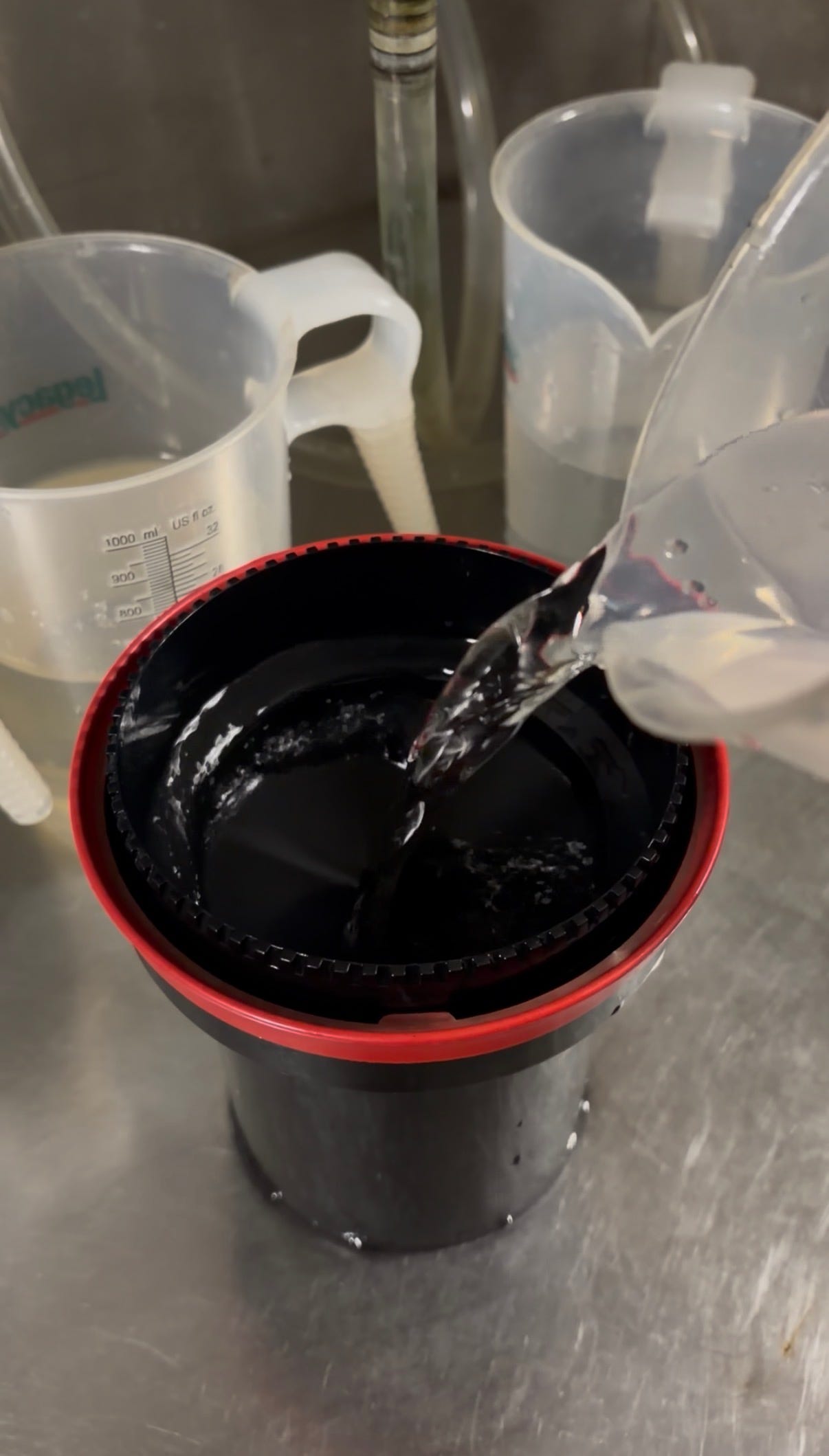
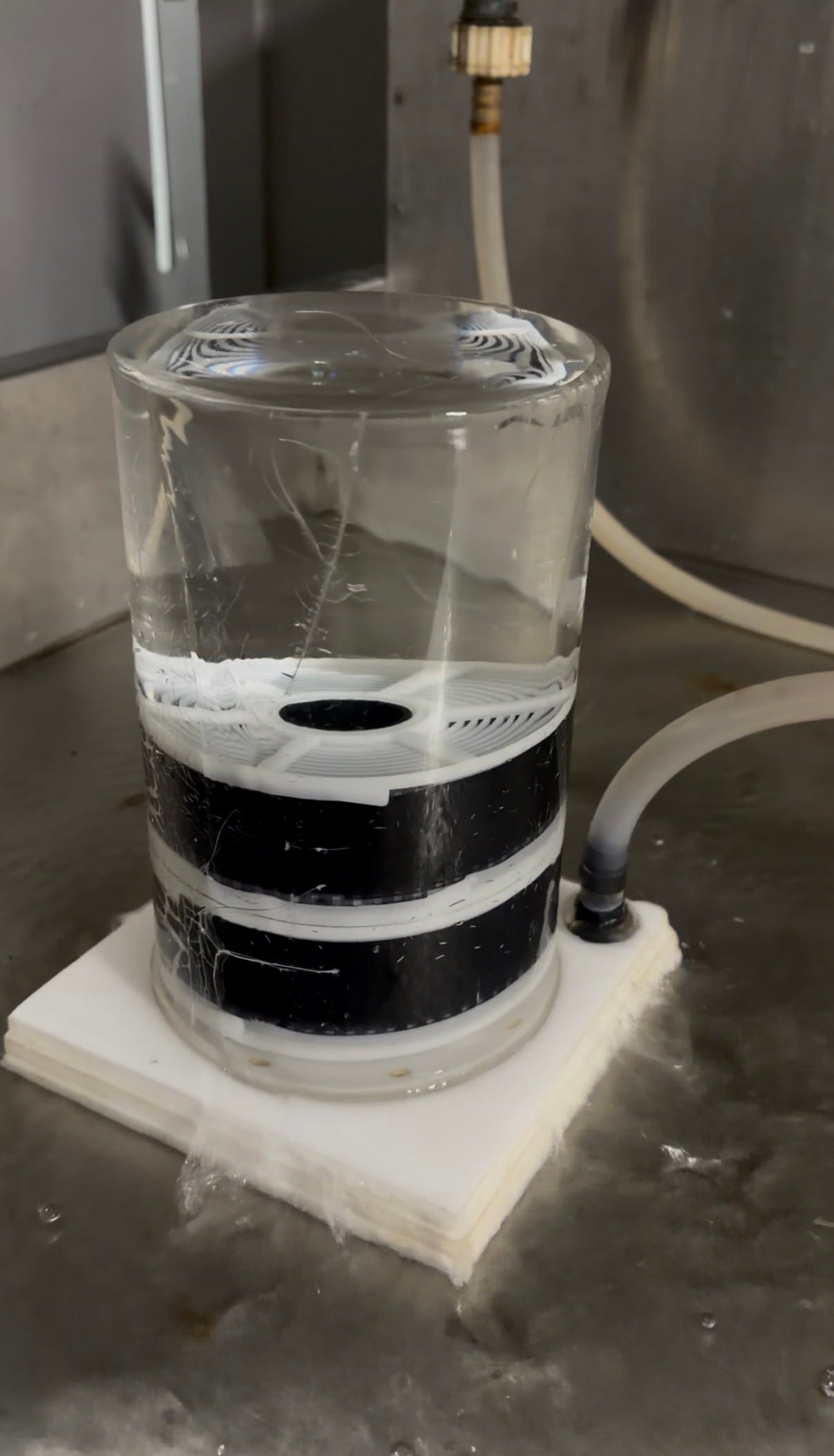
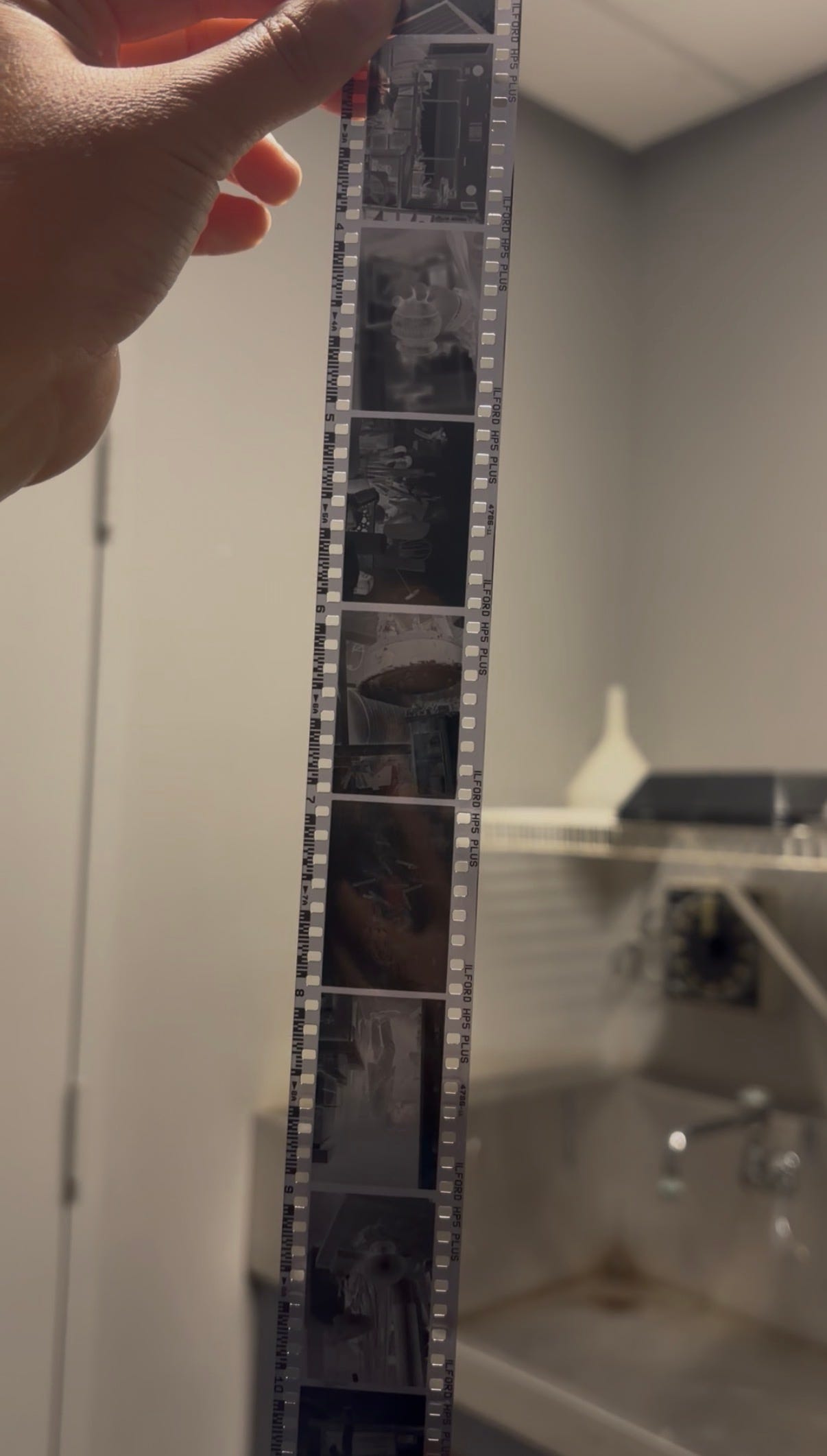
Once dry I scan my negatives using an Epson scanner at the Cuesta darkroom. In Houston a Noritsu scanner was available. I keep a thumb drive on my keychain so I always have one handy.
I haven’t learned to develop color film yet — it requires more precise temperature control and involves more chemical toxicity than black and white. For now I send my color rolls to a lab, though it’s something I want to learn eventually.
Why darkroom development matters
Today, images can be produced instantly and endlessly. That ease can remove us miles from art. The darkroom has made me slow down and be present with what I’m making.
Community darkrooms are wonderful third spaces. The people I met in my film class were some of my first friends in California. I still regularly follow the work of my darkroom friends in Houston. Almost everyone I’ve met who develops their own work has been kind, patient, and genuinely enthusiastic about sharing photography.
And finally, development — and film in general — teaches you to accept failure. Film has a life of its own. A roll can be underexposed, scratched, or accidentally fogged. I’ve had all of these, and several entirely blank rolls. Unlike digital, there’s no undo. Learning to work with that uncertainty — and often be delighted by it — is part of why seeing the final result is so rewarding.