My life is in my car
Surfboards, scrubs, and the camera that goes everywhere now

Last year I was in a pretty bad car crash. I’m okay but my beloved 2017 Toyota was not. Totaled. And the new one that replaced it has become, without much ceremony, my second home.
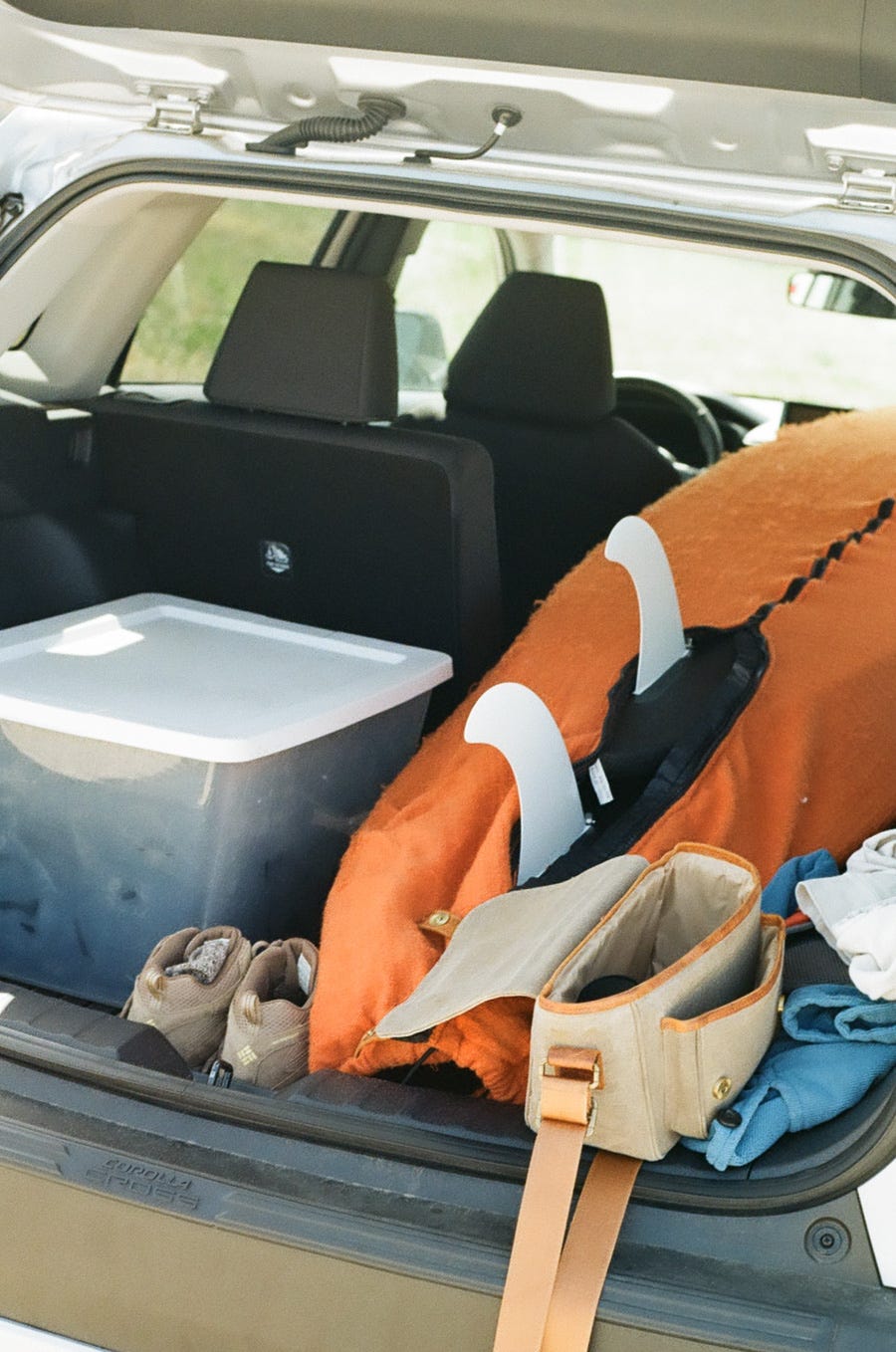
Here’s what’s in it at any given time:
One to two surfboards. This requires the backseat folded flat and the front passenger seat all the way down, headrest off. A 9-footer fits. My 8-footer can stack on top. It all looks like chaos from the outside but is perfectly snug.
All of the surf accessories — zinc, sunscreen, ear water repellent, earplugs, and swimmers ear drops. I am, apparently, a magnet for ear problems. A water sport chose me but we make it work.
My film cameras. To be upfront: leaving film in a hot car is technically bad practice. But I’m only shooting before or right after work, and when I get out at the end of a shift as the sun is dropping, there’s no time to go home first. So the cameras live in the car, tucked inside my purse, inside a zip-lock freezer bag for whatever insulation that offers. Is it ideal? No. Is shooting something better than shooting nothing? Yesss.
My surgical loupes - with covering three hospitals, a car is actually the best place to keep these. If I have an elective case or get called into one, I can just run out to the parking lot to get them from my trunk.
And a full spectrum of scrubs in every shade of blue known to hospital administration. When I’m moving between hospitals, I’ll sometimes just layer them — one set on top of another. At the end of a day I can be three scrubs deep. There’s something absurd but entirely practical about this.
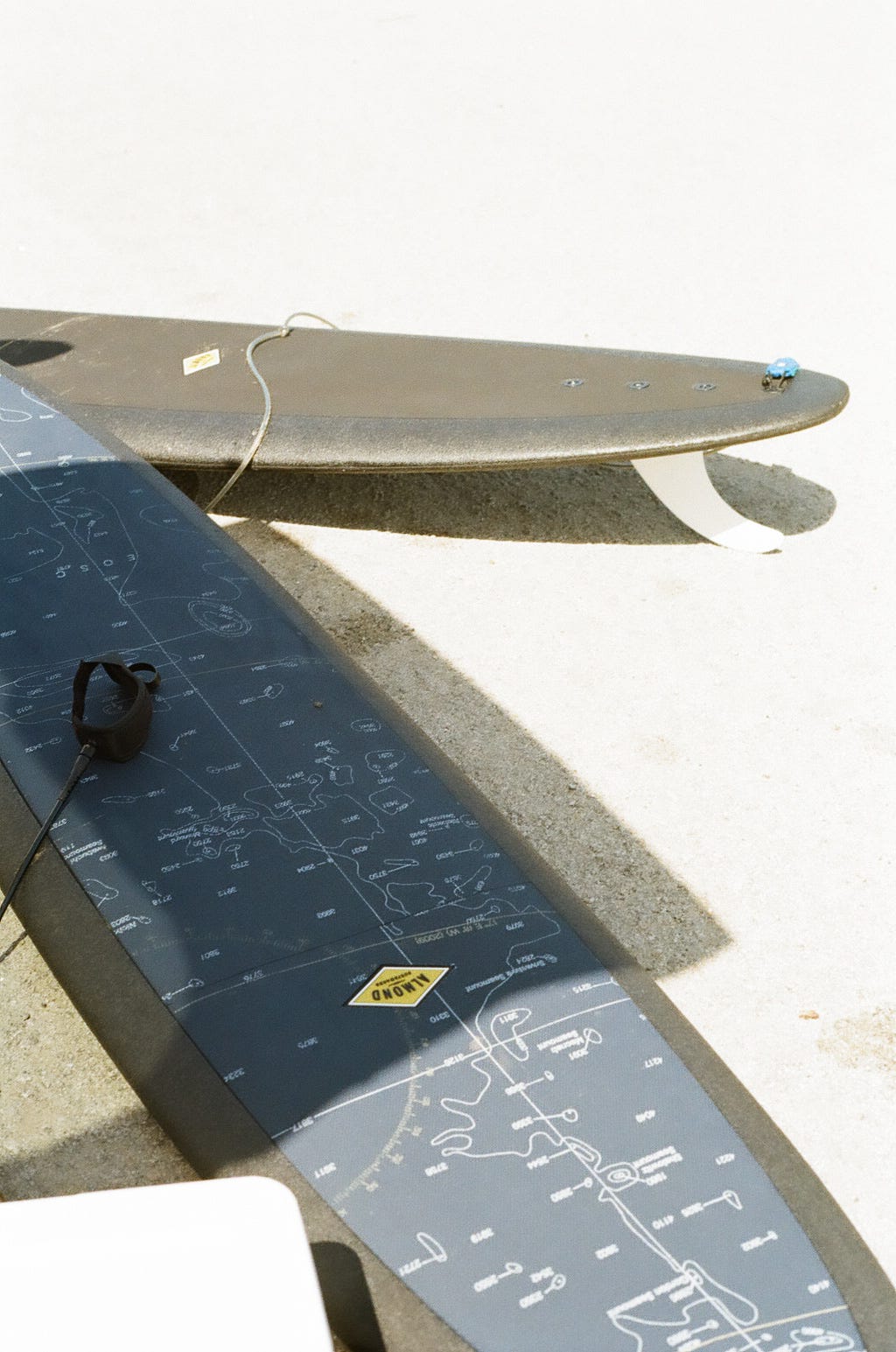
The job is meaningful. It’s also exhausting in ways that are hard to explain. What I’ve learned, slowly, is that the only thing that reliably helps is being outside.
Now that the days are longer, I’m surfing before work — which means a 5am alarm, which I will not pretend is going smoothly at all. BUT there is nothing like being in the water at first light.
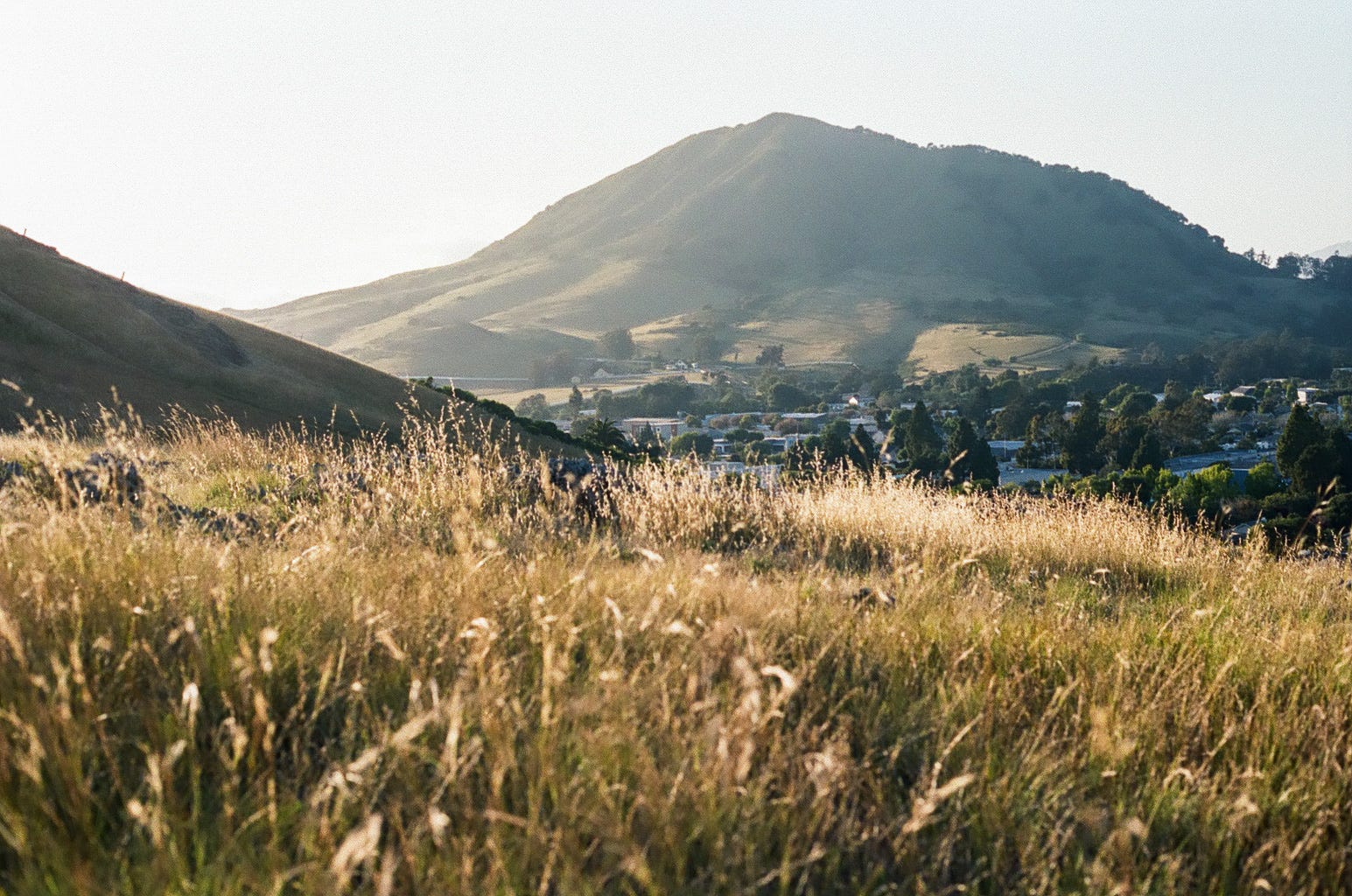
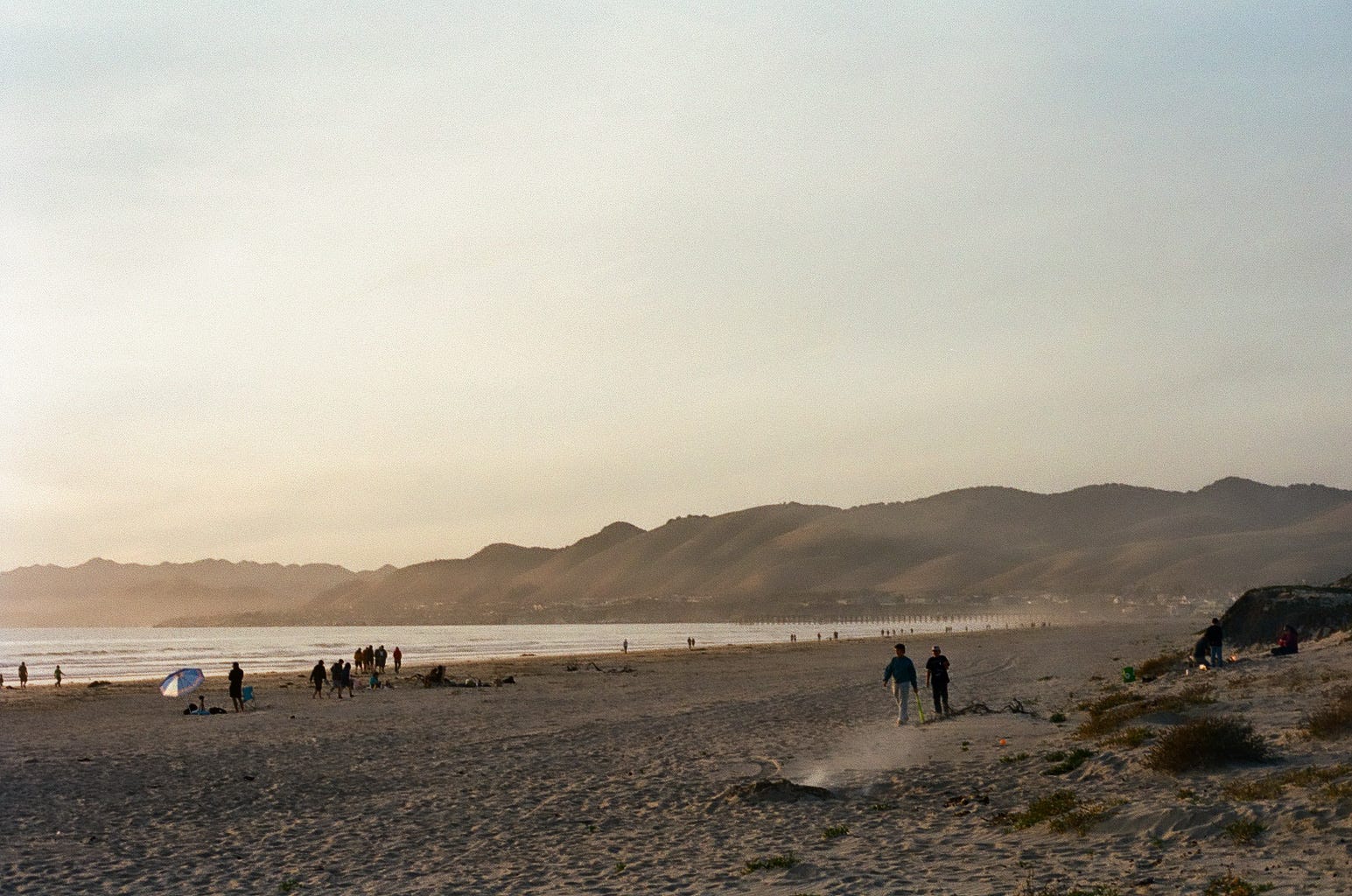
And at the end of every shift, regardless of how it went, I walk. This is non-negotiable now. We’re lucky on the Central Coast: real trails within ten minutes of SLO, forgiving hills with views we can reach in under an hour. If it’s been a late day and I don’t have that kind of energy, I do fifteen minutes on the beach with my camera. Something so small there’s no excuse when one lives this close to the water.
After a co-worker noticed my trunk, I’ve been thinking about what it means that my camera lives in the car in a freezer bag next to the zinc and the ear drops.
It means I’ve stopped treating it like a special occasion. It’s not something I take out when a shoot is planned and the conditions are right. It’s just there, the way the sunscreen is there, the way the scrubs are there. Part of the routine.
Many of my favorite frames from this spring came from the thirty-minute window between leaving a hospital and losing the light entirely. That’s the practice - the camera being somewhere in reach on an ordinary Tuesday.
If you’re struggling to shoot consistently - and most of us are — I’d ask one question before anything else: where does your camera live?
It shouldn’t be in a drawer. It shouldn’t be in a bag in your closet waiting for the right weekend. The freezer-bag-in-the-backseat situation is not elegant. But it’s working one roll at a time.