Everything I Did in 6 Months to Become a Photographer
Or, how to pivot into anything

Someone pointed out to me recently that we’re now halfway through the year. I’m not going to pretend the time flew — the first half of 2026 was heavy with burnout. But here’s the upside: I picked up a DSLR for the first time in seven years and built a real photography portfolio. Six months turns out to be the right amount of time for things to start snowballing — I started making regular income, people began coming to me, and I hit a natural point to level up my gear. Back in February, my one goal was to get a single paid client.
I can’t emphasize this enough: I felt wildly unqualified to start, with no professional background. I’d shot film for fun for two years, the first of which was entirely on auto. So this isn’t really a story about how I got here in six months — it’s about how to be a beginner at something and make the most of that beautiful time.
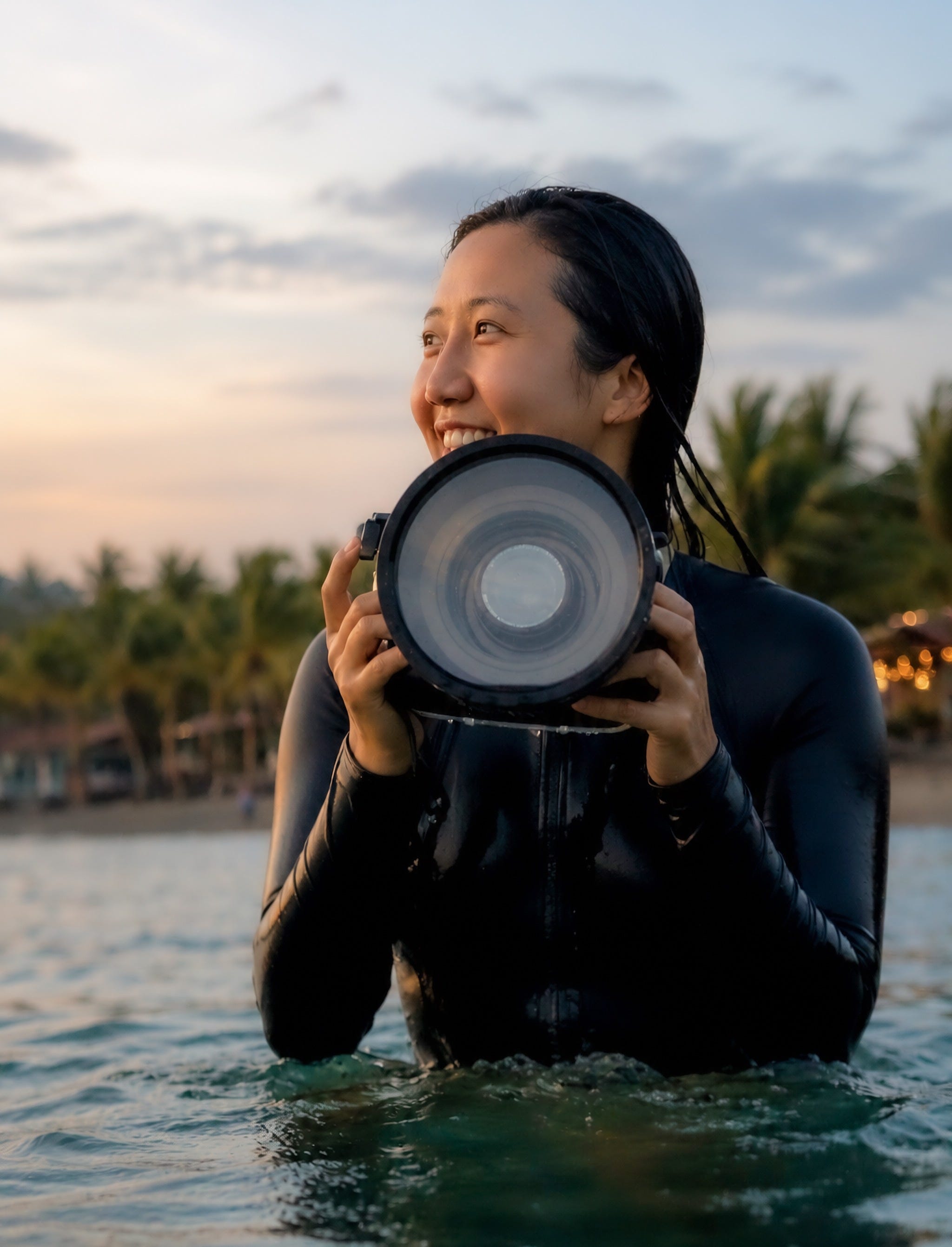
1. I focused on one thing to get good at
I’m a professional list-maker and collector of hobbies. There’s a long list of things I’d like to do — get fluent in medical Spanish, learn classic calligraphy, cross-step surf — it could stretch for ten miles. Not every hobby needs to be monetized, but I explicitly wanted this one to be professional, and that meant picking it, and only it, for six months. This piece put shiny object syndrome in perspective for me:
“Six months of focused, locked-in work on one thing will outperform ten years of dispersed, hedged work on five things.”
2. I found my people
This is probably the most important thing on this list. I took a darkroom class at Cuesta College, my local community college, taught by a photographer named Richard Fusillo — he’s a great teacher and someone deeply knowledgeable about lighting, composition, and the history of photography. More than that: he was a professional photographer I knew personally and saw regularly. Almost everyone else I knew was a doctor or an engineer. The single most important part of learning something new is being regularly around people who already do that thing.
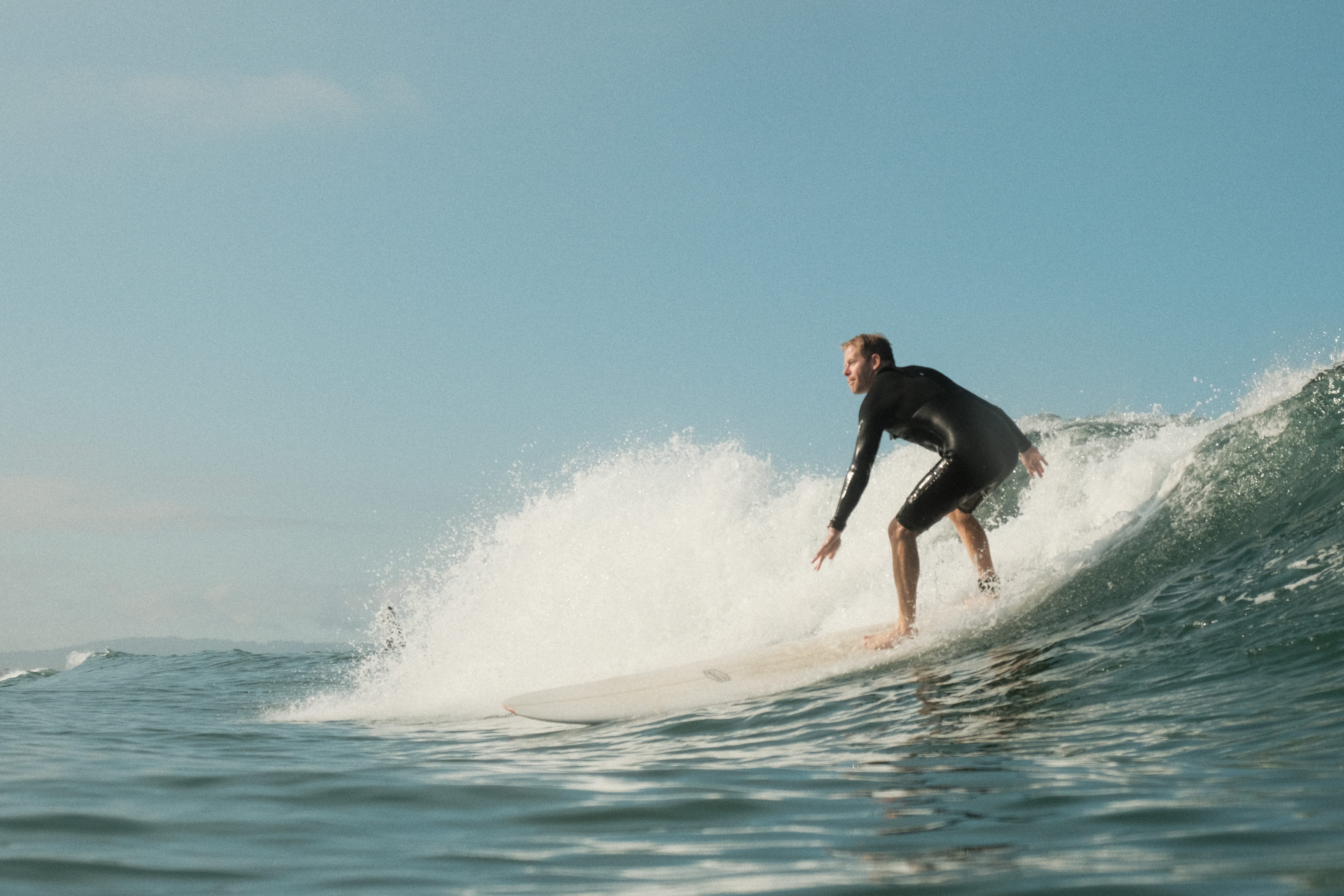
I thought of Roger Bannister, who broke the four-minute mile in 1954. This was a mark people had called physically impossible for decades. Forty-six days later, John Landy broke it again. And then within a few years, dozens of runners had done it. Nothing about the human body had changed — what changed is that someone close enough to see had just proven it was possible. A mentor does that for us on a regular basis. I still message Richard about specific problems. When I knew I wanted to learn surf photography, I searched for a mentor and found Kevin Gilligan, an LA-based sports photographer. Like me, he has another career and is also a lawyer. I didn’t just have a great lesson, I had the opportunity to befriend someone like me coming to photography after doing something else.
I also met other photographers in that class, several of whom became my first friends on the Central Coast. We have gone on photo walks and shoots together, and I still message them when I want a second opinion on a shoot or help troubleshooting a camera problem. It reminds me of residency — how does one person learn to operate on another human being, across seven years of insane physical and emotional strain? The only way to do it is being surrounded by other people doing the exact same thing. Learning surgery would have been impossible without other residents; I still call my co-fellow to talk through cases. No other pursuit on earth is as stressful as surgical residency, but the underlying mechanism is the same. YouTube has taught me a lot, but it can only get you so far. Anyone starting something new needs both a mentor and a crowd of people doing it alongside them.
3. I built a feedback loop in both directions
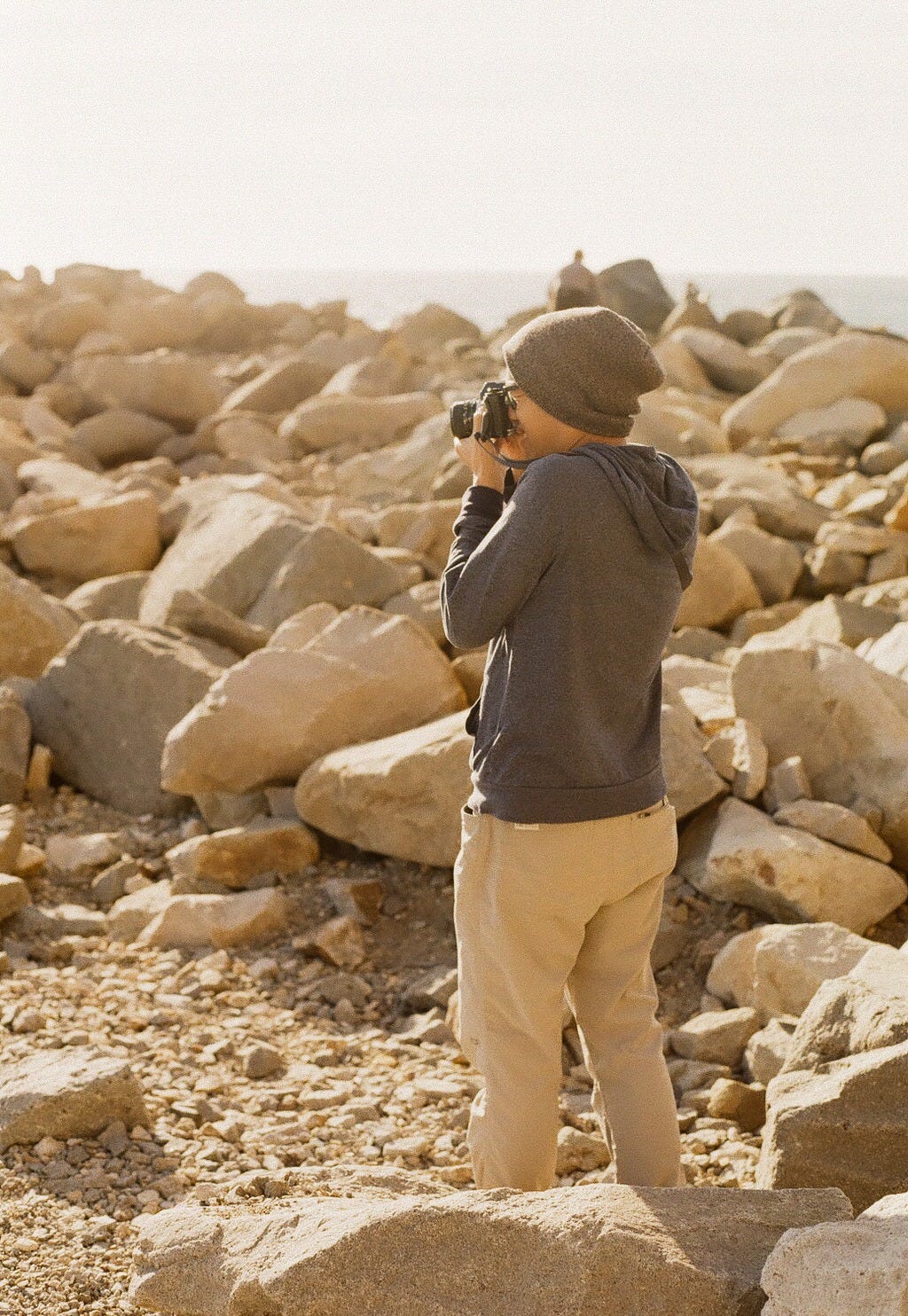
One of my favorite surgeons has a simple rule: you can’t get better if you don’t review your work. So I send my photos to other photographers and ask what is and isn’t working. They’ve always been generous with feedback, and it’s one of the fastest ways I’ve found to improve.
The flip side is asking for reviews back. About three months in, I opened a free Google Business profile and an Airbnb account. Even for free shoots, I asked people to leave a review after sending their gallery. A strong reputation is an asset — I also pulled from these when building my new website later on.
4. I worked with one camera
I bought a used Fujifilm X-T4 with an 18-55mm lens off eBay. I chose it because I loved the color science, and it was one generation behind the X-T5 — good enough, and cheaper. I really love this camera. It’s ideal for portraits, which make up most of my work, and I spent enough hours with it that I know it inside and out.
When anyone is learning something new, gear is the least important part, but it’s the part that most easily gets mistaken for the most important. Just like picking one thing to learn, it’s better to pick one camera and stick with it. Constraint makes us better. What actually stops most people from getting good at something isn’t equipment, it’s repetition. Someone who wants to get good at cooking can start with a $200 set of cookware from Target — they don’t need to spend thousands on Le Creuset first.
5. I leveled up right as I hit a plateau
This is related to the point above. After several months of shooting constantly on that one camera, I hit a natural plateau. I’d wanted to shoot more action photography in the water and needed higher resolution. It felt like the right time to invest in a full-frame body and a better lens, which I could also now afford with the money I’d made over the past six months.
Around the same time, I opened Lightroom and realized I had a genuinely substantial portfolio, and that it was time for a new website. My first one was built on Squarespace, back when my work was mostly film. I started rebuilding it myself before realizing a professional would get me there dramatically faster. None of this would have made sense in month two, but now it’s an investment that just feels right.
6. I shot about once a week
I’d love to say I practiced every single day. I didn’t. Most days I got home from the hospital, laid down, ate, and laid down again. Some days I walked the beach and shot film. But a realistic floor for me was one shoot a week — planned in advance, with a location and a purpose. It gave me reps in finding inspiration and planning poses ahead of time. For couples, families, and surfers, I now have pose flows memorized, so I can just chat with people while it happens naturally. I also built reps in communication, editing in Lightroom, and delivering galleries through Pixieset.
Lately I’ve shot more than once a week, but once a week was my minimum on any weekend I wasn’t on call. I also did a number of free shoots — I asked friends and they told their friends. Nearly every photographer I’ve listened to started this way, and I still do free work when it’s a project I care about.
7. I kept a regular learning schedule
Alongside the point above, I built in real self-study. When I was in Houston, I took a class from Únies Gonzalez, still one of the best film photographers I’ve seen. Before she said a word about camera mechanics, she told us: to take great photos, you have to look at a lot of photos. Go to libraries and bookstores. It’s the same advice good writers give about reading — you have to study the work of people operating at the level you want to reach, not for school, but for life.
I also think it matters to learn in long form. Instagram — my personal haven for medical memes — was eating hours of my evenings. So I built a schedule and actually kept it for six months, intentionally not intimidating: Monday, I pulled portfolios from other photographers into a Google Slides deck and sat with about ten images, listing what I liked about each one — motion blur, color grading, posing, whatever it was. Wednesday was a dedicated Lightroom editing day. Friday was long-form YouTube learning. The rule was a minimum of one hour per day, and I usually went longer.
8. I actually told people I was a photographer
Saying it out loud, before I felt anything close to ready, was harder than picking up the camera in the first place.
My friend Angie, also a photographer, reframed this for me: marketing isn’t only “putting yourself out there,” it’s having confidence in what we have to offer. So I started posting my work on Instagram, writing on Substack, and listing myself as a photography service on Airbnb Experiences. For some reason, I was scared my Instagram friends would think the whole thing was silly. I suspect anyone starting something new feels some version of this — the fear of being seen trying. What actually happened: every friend I spoke with was wildly encouraging.
Six months ago I was a surgeon who occasionally shot film. I’m still a surgeon. But I’m also, now, a photographer — and the gap between those two sentences was never talent. It was a system I could repeat around work when I didn’t feel like it. I have so much that I want to do over the next six months, but today I just walked to Pismo Pier and was really grateful to be here.